
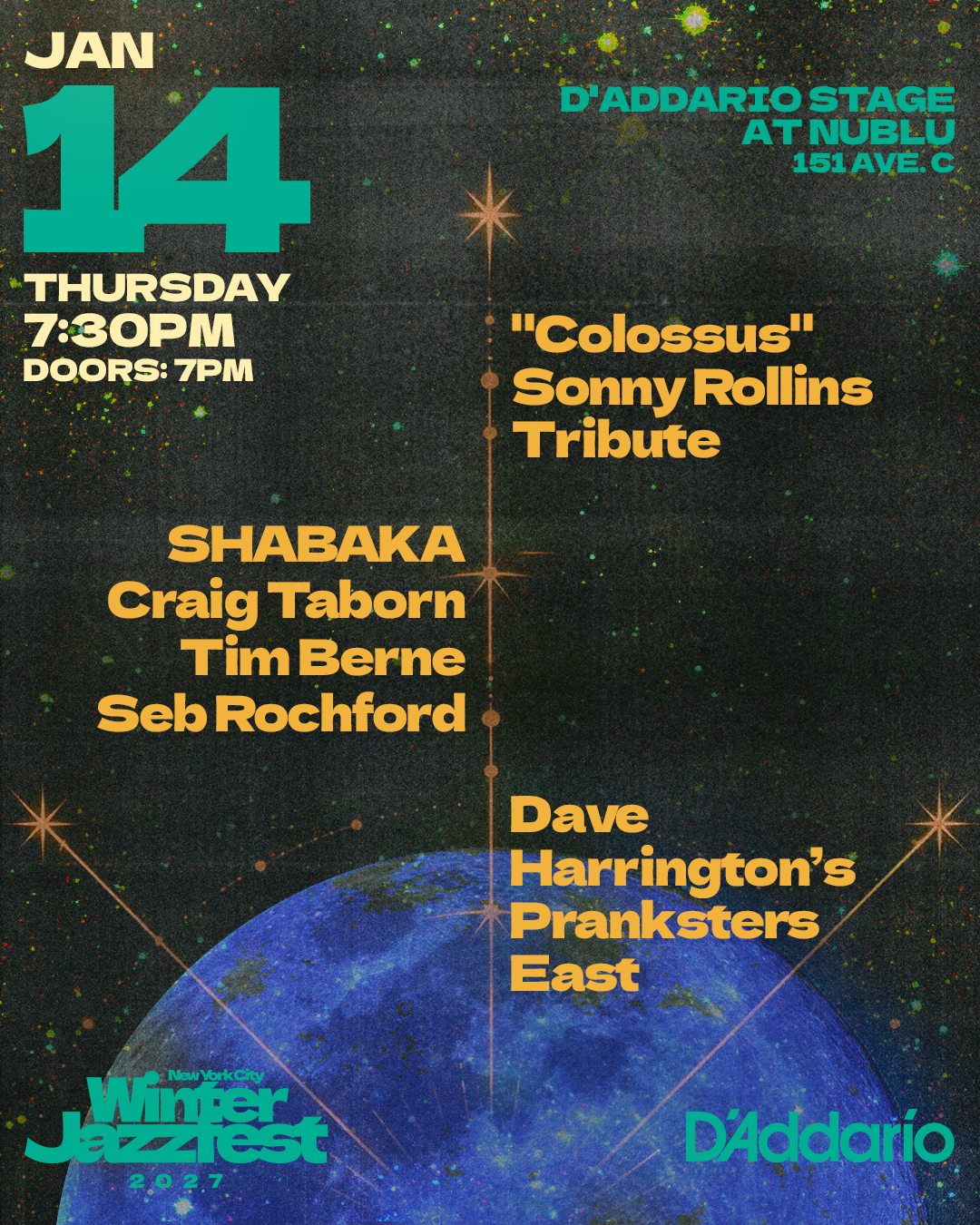
January 14, 2027
"Colossus" Sonny Rollins Tribute / SHABAKA, Craig Taborn, Tim Berne, Seb Rochford / Dave Harrington Prankster’s East
Featuring
Colossus: A Tribute to Sonny Rollins feat. Chad Taylor, Orrin Evans, Eric Wyatt, Emilio Modeste, Rico Jones, Neta Raanan, Madison Rast, Neil Podgurski
SHABAKA w/ Craig Taborn, Tim Berne and Seb Rochford
Dave Harrington's Prankster's East
Newyork Knick (dj)
Venue: D’addario Stage at Nublu
DOORS: 7:00PM
SHOW: 7:30PM
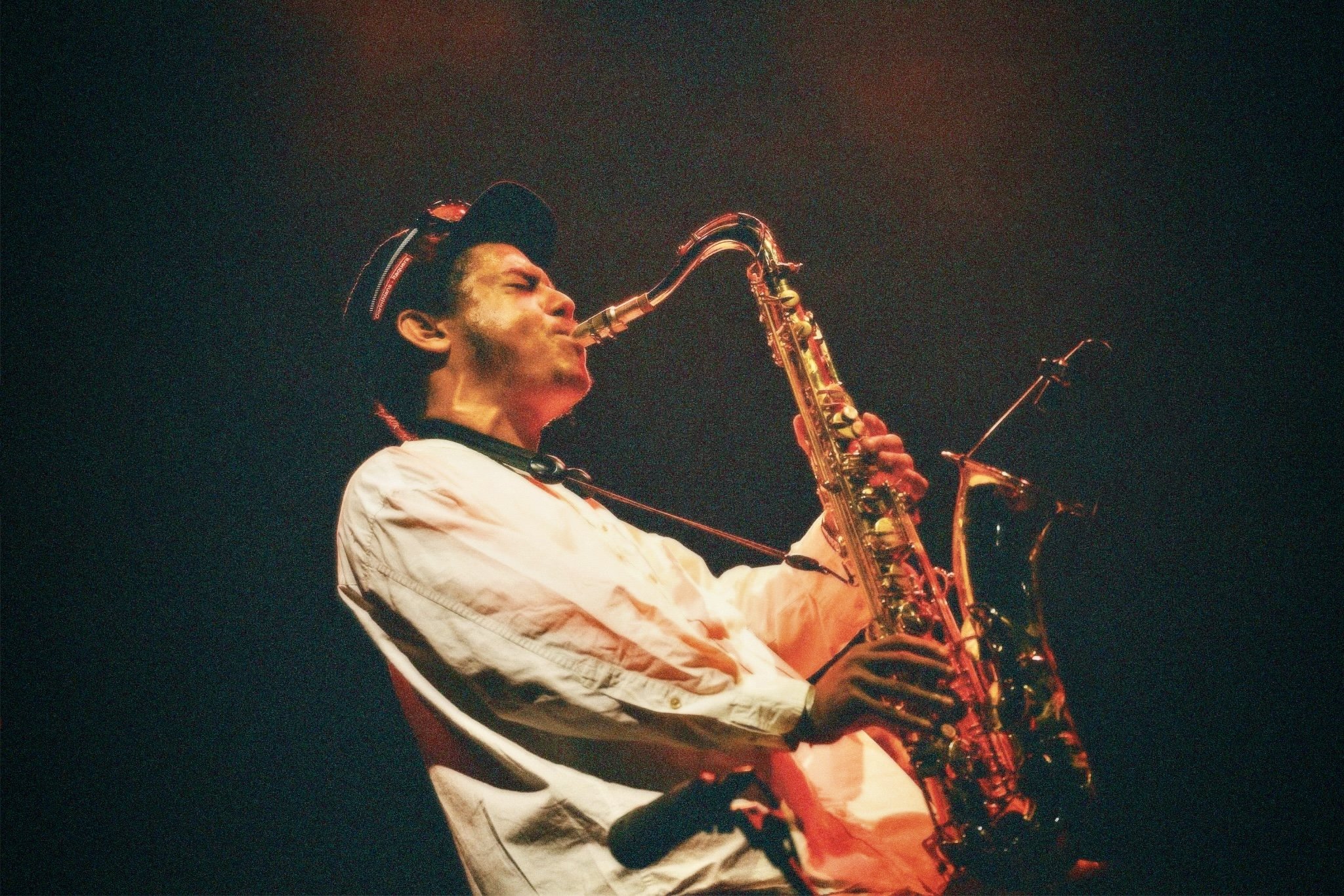
ABOUT
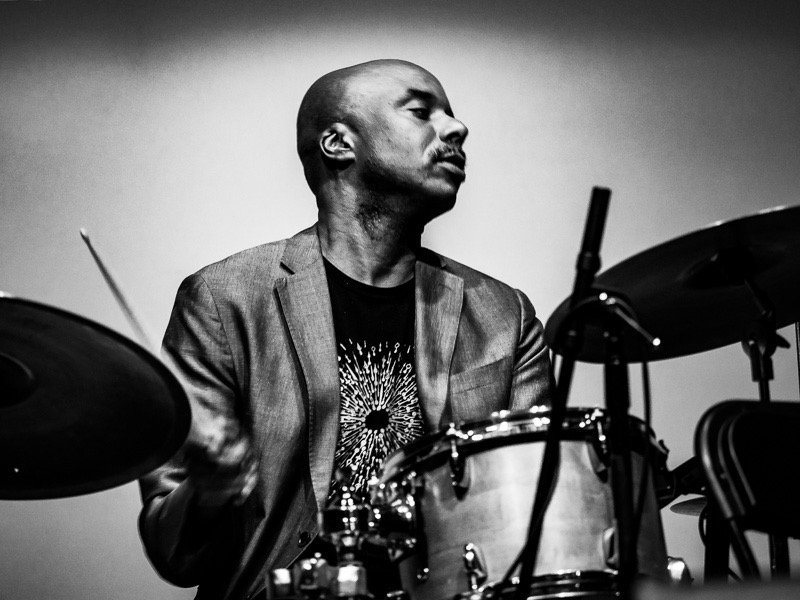
CHAD TAYLOR
Chad Taylor (born 1973) is an award winning American jazz drummer, percussionist, composer, educator, and scholar, best known for his innovative contributions to improvised music and his role in bridging jazz traditions with Afrodiasporic rhythms. Raised in Chicago, where he began performing professionally at age 15, Taylor co-founded the influential Chicago Underground ensembles with cornetist Rob Mazurek, blending electroacoustic elements with free improvisation across projects like the Chicago Underground Duo, Trio, Quartet and Orchestra. Taylor's career emphasizes coll aboration and rhythmic exploration, drawing from influences such as the Association for the Advancement of Creative Musicians (AACM) and mentors like Joe Chambers, under whom he studied at The New School, where he earned a BFA in jazz performance. His notable partnerships include long-term work with saxophonist James Brandon Lewis in ensembles like the Red Lilly Quintet and Trio, as well as contributions to groups led by Pharoah Sanders, Marc Ribot, Jaimie Branch's Fly or Die, and Rob Mazurek's Exploding Star Orchestra.
As a leader, Taylor has helmed projects such as the Chad Taylor Trio—with Brian Settles and Neil Podgurski—releasing acclaimed albums like The Daily Biological (2020) and The Reel (2022), which showcase his original compositions integrating mbira traditions and polyrhythmic structures. His most recent quintet recording Smokeshifter was ranked as one the top 10 jazz recordings of 2025 by Jazz Times and by influential jazz critic Nate Chinen. His record HyperGlyph with Rob Mazurek was ranked as one of the top 10 recordings of 2025 by the New York Times.
Currently residing in Philadelphia and serving as Associate Professor, Artistic Director of Jazz Studies, and holder of the William S. Dietrich II Chair at the University of Pittsburgh. Taylor teaches courses in jazz performance, history, and rhythmic analysis while continuing to perform internationally at festivals like the Newport Jazz Festival and London Jazz Festival. His recent honors include a 2024 Pew Fellowship, DownBeat's 2022 Rising Star Jazz Group of the Year for the Red Lilly Quintet, and recognition in international critics' polls for his percussion work. Taylor's approach prioritizes spiritual intention and ego-free collaboration, often incorporating handmade instruments and African-derived techniques to foster open, tradition-blending improvisation.
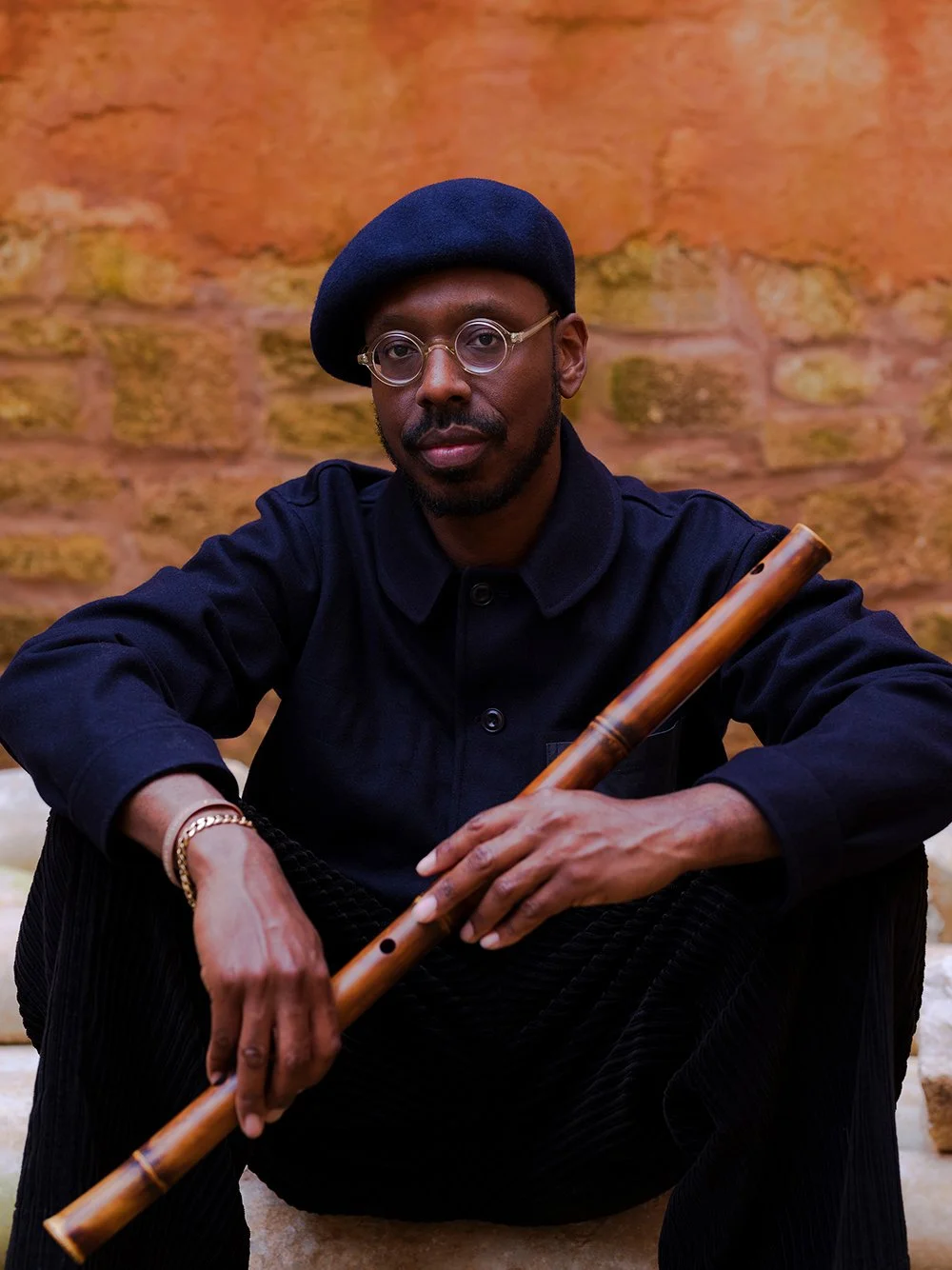
SHABAKA
Shabaka Hutchings is widely regarded as one of the UK’s most influential musicians and a defining figure in contemporary British culture. A bandleader, multi-instrumentalist, and producer, his work has reshaped global perceptions of jazz and experimental music through a practice that moves fluidly between jazz, electronic, spiritual, and diasporic traditions.
In his solo work, Shabaka’s music reflects a deepening focus on breath, embodiment, and personal authorship. His 2026 album Of The Earth, written, performed, produced, and mixed entirely by Shabaka, marks a pivotal moment in his artistic evolution. Where earlier projects explored collective improvisation and a withdrawal from familiar forms, this work represents integration - uniting rhythmic propulsion, textural depth, and melodic openness within a singular creative vision.
Drawing together the dance-driven energy associated with Sons of Kemet and The Comet Is Coming and the quieter, breath-led language of his recent solo explorations in Perceive It’s Beauty Acknowledge It’s Grace, his latest album, Of The Earth establishes Shabaka as a fully realised instrumentalist-producer. Created largely while travelling, the music is built from portable instruments and production tools, with looping rhythmic structures underpinning expansive choral melodies performed primarily on alto flute, alongside saxophone.
Shabaka’s practice has been profoundly shaped by years of flute study across traditions from Japan, the Americas, and beyond. This immersion transformed his understanding of resonance, phrasing, and melodic flow, and continues to inform his relationship with the saxophone, which he returned to with renewed clarity following an extended period away from the instrument. For the first time in his recorded output, Shabaka also incorporates his voice, using rap not as a stylistic departure but as another extension of rhythm, breath, and musical phrasing.
Across all his work, Shabaka’s music is driven by motion - physical, historical, and diasporic - tracing connections between movement, memory, and sound. Unconcerned with genre and grounded in intent, his practice continues to evolve as a deeply embodied form of creative expression.